

Is your cat coughing without hairballs?
One common symptom of feline asthma is a persistent cough. Owners sometimes mistake it for their cat trying to expel a hairball.
Asthma is a condition affecting the respiratory system. It specifically impacts the lungs. Hairballs, on the other hand, are a digestive issue. They start in the stomach.
In contrast, a cat with asthma that is coughing will usually keep its neck straight. Its back stays parallel to the floor. It typically does not move backward while coughing.
Although the cough sounds like gagging, it will generally not result in the production of a hairball.
Furthermore, difficulty in breathing is a serious symptom of asthma and is not a feature of hairballs.
My cat was recently diagnosed with asthma
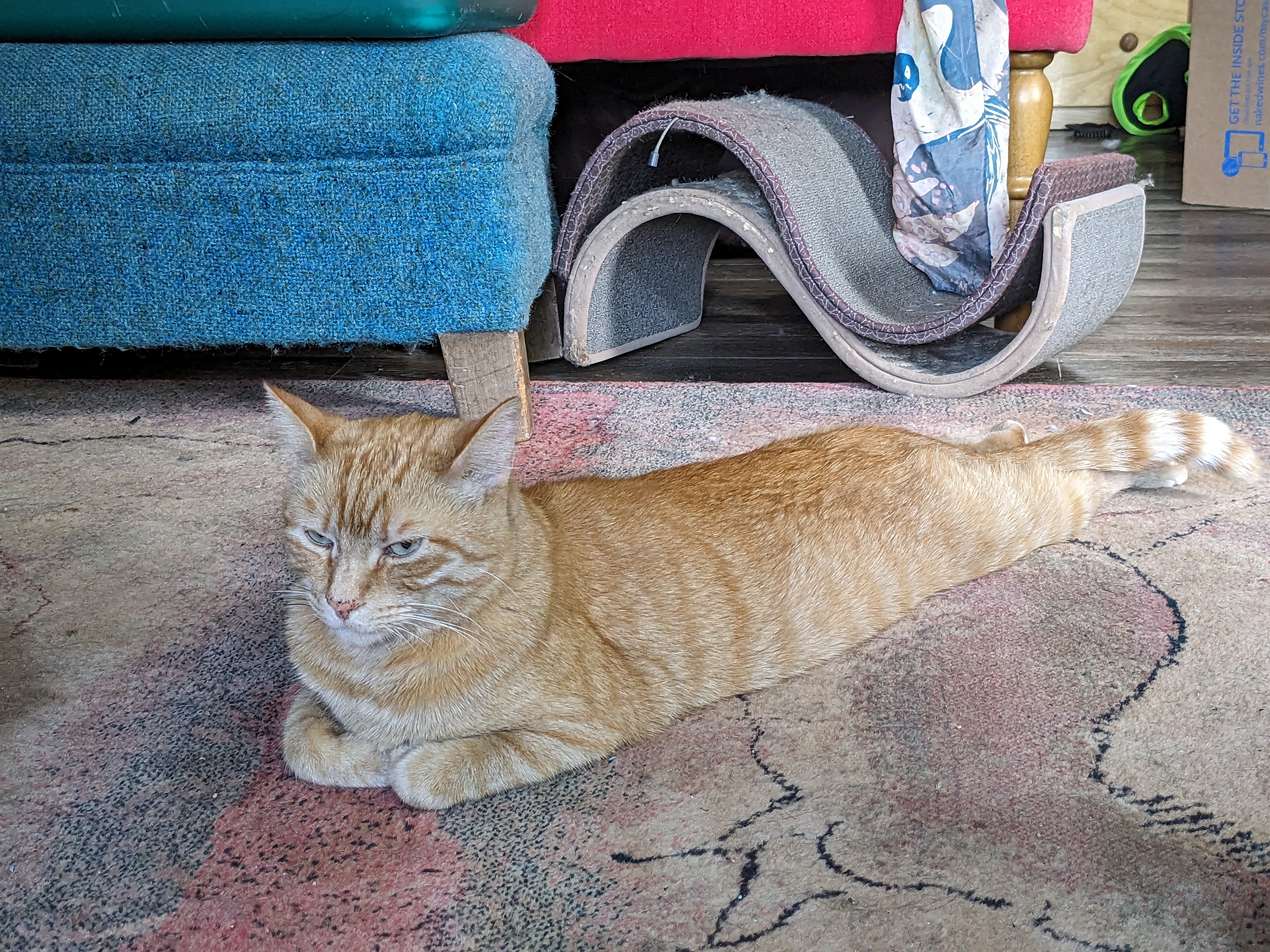
I noticed Wolfie the Wobbly, my cat, had been coughing for several months. I initially suspected hairballs. Yet, I found no hairballs. I tried a hairball relaxant, but it didn’t give any relief.
During his recent annual exam at Animal Blessings Veterinary Hospital, Dr. Ann Vestal listened to his heart and it sounded normal.
The coughing persisted, so I took a video of Wolfie coughing and sent it to Dr. Ann. She recommended a chest x-ray. The x-ray revealed a faint fish-like bone structure, indicating that Wolfie has asthma.
Treatment
The main goal in treating feline asthma is to reduce airway inflammation. This helps cats breathe easier. Another goal is opening up the airways.
Two types of medications:
- corticosteroids to control inflammation
- bronchodilators to relax the airway muscles.
Wolfie’s choice of treatment
Dr. Ann suggested corticosteroids in pill form (Prednisolone) for Wolfie, explaining that bronchodilators may be frightening for him.
I was very relieved when the prescribed Prednisolone stopped Wolfie’s coughing.
This understanding is crucial for empowering cat owners to take an active role in their pet’s health management.
Feline asthma is not curable and it is indeed manageable.
Feline asthma is defined by three key features:
- inflammation of the airways
- an exaggerated response of the airways to stimuli (hyperresponsiveness)
- a limitation in the flow of air through the lungs.
Typically, feline asthma develops in cats during their young to middle-aged years, generally between the ages of two and eight. Wolfie will be three years old this summer.
Interestingly, the condition appears to be more prevalent in female cats and certain breeds, such as Siamese and Himalayan. Wolfie’s long narrow face and sleek body resemble Siamese cat characteristics. I previously had a Siamese cat with asthma who lived for many years.


Environmental factors can trigger asthma
The primary trigger for feline asthma is an allergic reaction that occurs when a susceptible cat inhales an allergen. While pinpointing the exact allergen responsible can be challenging, there are several common environmental factors that are often implicated.
These include substances like:
- pollen from trees
- weeds and grass
- mold spores
- dust mites found in household dust
- tobacco smoke
- dust generated from certain types of cat litter
- various household cleaning products
- aerosol sprays
- perfumes
- hairspray
- smoke emanating from fireplaces
- candles
- in some instances, specific food ingredients.
I regularly clean The Cat House and don’t smoke or use hairspray, perfumes, or candles. Wolfie uses pee pads instead of the litter box. This makes me think that Wolfie’s allergies are likely due to pollen and weeds.
Stress and Weight factors
Beyond these physical allergens, it’s also recognized that stressful events can trigger asthma episodes in some cats. Garbage trucks and humans entering The Cat House cause Wolfie stress.
Additionally, cats that are overweight have a higher risk of developing chronic respiratory conditions, including asthma. Wolfie’s weight is a healthy nine pounds.
Genetic factors
It is also believed that there is a genetic part. The condition appears to be more prevalent in female cats and certain breeds, such as Siamese and Himalayan. Wolfie’s long narrow face and sleek body resemble Siamese cat characteristics. I previously had a Siamese cat with asthma who lived for many years.
Shoot a video of your cat coughing
If there is any uncertainty about whether a cat is having an asthma attack, record the event on video. If you are unsure whether the cat is trying to expel a hairball, also record the event on video. Showing the video to a veterinarian can be extremely helpful in obtaining a precise diagnosis.
When a cat is trying to get rid of a hairball, it will typically arch its back. It vomits up a mass of hair and fluid. This often happens while moving backward.
Diagnostic tests
Chest X-rays are a common first imaging technique used to visualize the lungs and airways. They look for signs of inflammation, such as a branching bronchial pattern often described as “lung donuts” or “tramlines.” They also assess potential overinflation of the lungs.
Calm and stable environment is crucial
Creating a calm and stable environment is crucial for managing feline asthma, as stress can worsen the condition. This highlights the importance of managing stress besides physical allergens. I secure Wolfie in a safe place to reduce his exposure to potential triggers. This happens when garbage trucks pass by. I also do this when people enter the front porch. Additionally, The Cat House is equipped with multiple air purifiers, and the furnace filters are replaced regularly.



Leave a Reply